

 Image 1 of 2
 Image 2 of 2
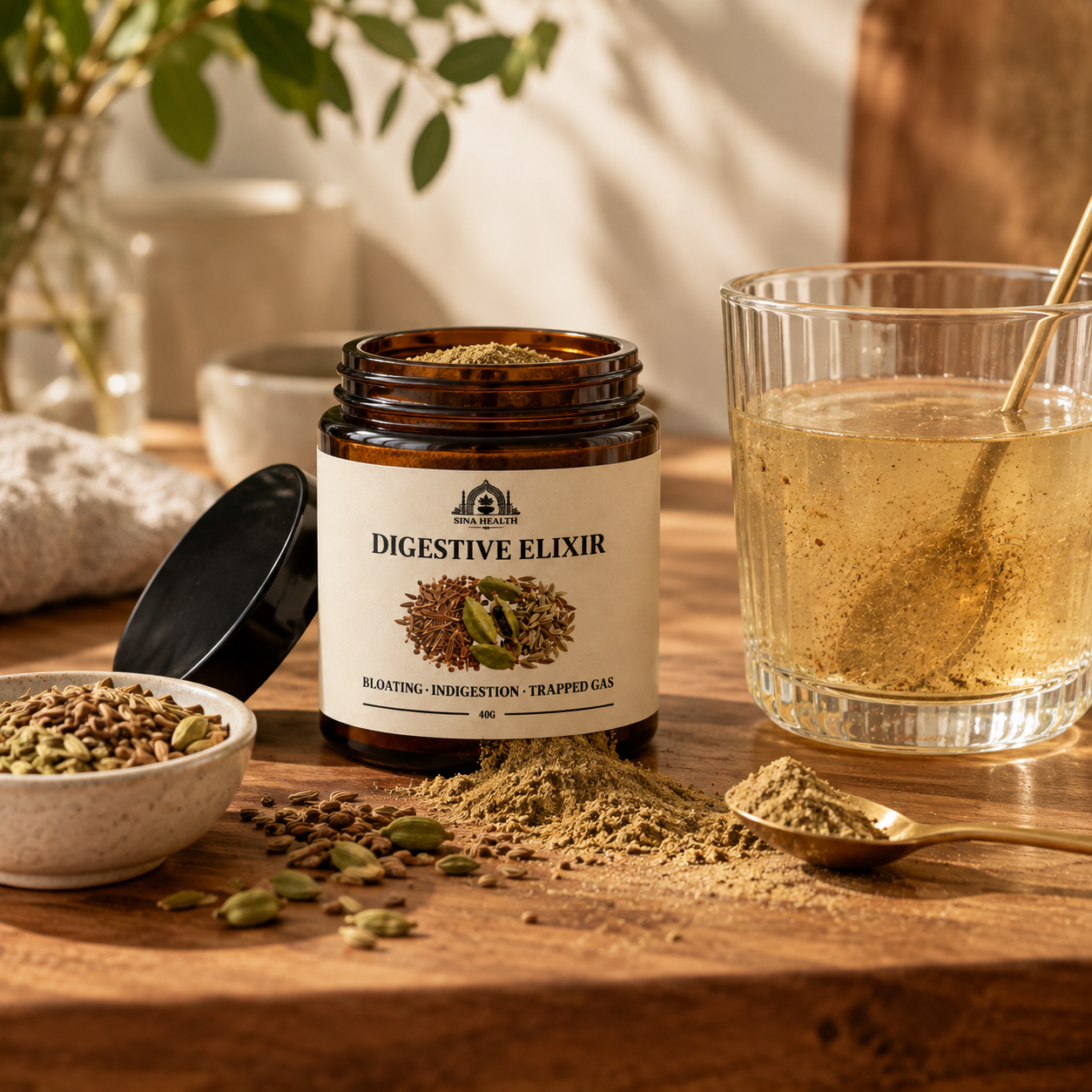
A botanical blend inspired by traditional post-meal practices.
Created by a holistic nutritionist, this formula combines aromatic and warming spices; carom, fennel and cardamom in a digestive-focused formulation designed to use as a simple after-meal ritual.
How to use: Mix ½ tsp (2g) into half a cup of warm or hot water and take after meals. Alternatively, take the powder directly and follow with warm or hot water.
Carom (Trachyspermum ammi) has been used for centuries in Ayurvedic, Persian and South Asian medicine as a warming carminative and digestive herb. Traditionally, it was used for indigestion, trapped gas, abdominal fullness and bloating, particularly after meals. Its key constituent, thymol, contributes to its potent aromatic properties and has been studied for antimicrobial, antioxidant and gastrointestinal activity.
Fennel (Foeniculum vulgare) has a long history in Ayurvedic, Persian, Greek and Mediterranean medicine, where it was valued as a gentle digestive and carminative botanical. Traditionally, fennel was used for flatulence, bloating, abdominal cramping and indigestion. Its volatile compounds, particularly anethole and fenchone, have demonstrated antispasmodic, antioxidant and gastrointestinal properties in research.
Cardamom (Elettaria cardamomum) has been treasured in Ayurvedic, Persian and Greco-Arab medicine as a warming aromatic digestive. Traditionally, it was used for indigestion, nausea, flatulence and abdominal discomfort, often alongside other digestive spices. Its constituents, including 1,8-cineole and α-terpinyl acetate, have been investigated for antioxidant, antimicrobial, anti-inflammatory and gastrointestinal effects.
Together, carom, fennel and cardamom form a traditional digestive combination with complementary warming, aromatic and carminative properties. Their historical use centres around post-meal digestive discomfort, trapped gas, bloating, fullness and indigestion, making this combination particularly relevant to traditional digestive medicine.
A botanical blend inspired by traditional post-meal practices.
Created by a holistic nutritionist, this formula combines aromatic and warming spices; carom, fennel and cardamom in a digestive-focused formulation designed to use as a simple after-meal ritual.
How to use: Mix ½ tsp (2g) into half a cup of warm or hot water and take after meals. Alternatively, take the powder directly and follow with warm or hot water.
Carom (Trachyspermum ammi) has been used for centuries in Ayurvedic, Persian and South Asian medicine as a warming carminative and digestive herb. Traditionally, it was used for indigestion, trapped gas, abdominal fullness and bloating, particularly after meals. Its key constituent, thymol, contributes to its potent aromatic properties and has been studied for antimicrobial, antioxidant and gastrointestinal activity.
Fennel (Foeniculum vulgare) has a long history in Ayurvedic, Persian, Greek and Mediterranean medicine, where it was valued as a gentle digestive and carminative botanical. Traditionally, fennel was used for flatulence, bloating, abdominal cramping and indigestion. Its volatile compounds, particularly anethole and fenchone, have demonstrated antispasmodic, antioxidant and gastrointestinal properties in research.
Cardamom (Elettaria cardamomum) has been treasured in Ayurvedic, Persian and Greco-Arab medicine as a warming aromatic digestive. Traditionally, it was used for indigestion, nausea, flatulence and abdominal discomfort, often alongside other digestive spices. Its constituents, including 1,8-cineole and α-terpinyl acetate, have been investigated for antioxidant, antimicrobial, anti-inflammatory and gastrointestinal effects.
Together, carom, fennel and cardamom form a traditional digestive combination with complementary warming, aromatic and carminative properties. Their historical use centres around post-meal digestive discomfort, trapped gas, bloating, fullness and indigestion, making this combination particularly relevant to traditional digestive medicine.